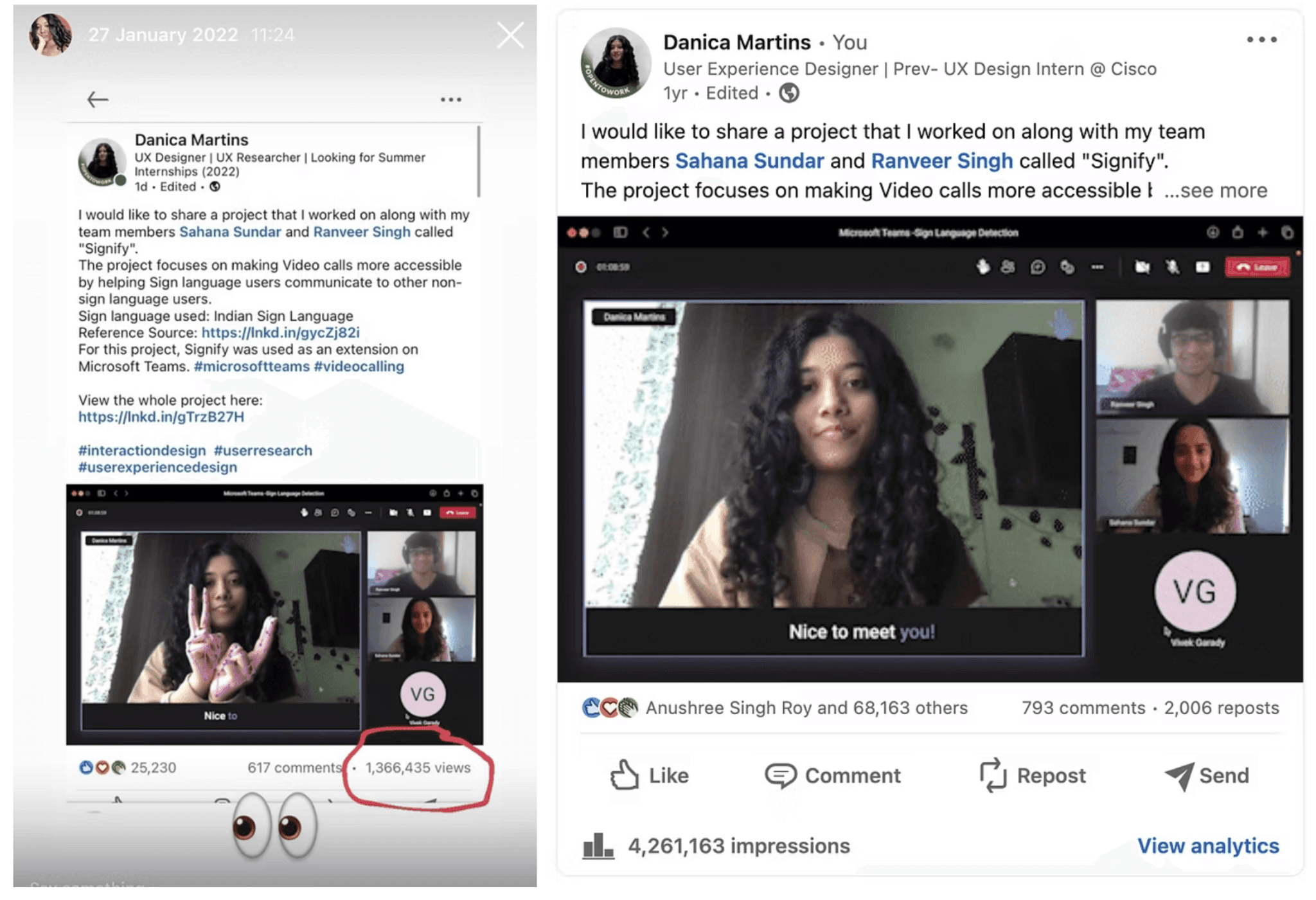
In January 2022, my team and I set out to create Signify, an accessibility feature for video calls that translates sign language into voice output. The goal was simple but important: make communication more inclusive for the Deaf and Hard of Hearing community 🤝.
Viral Response and Community Engagement
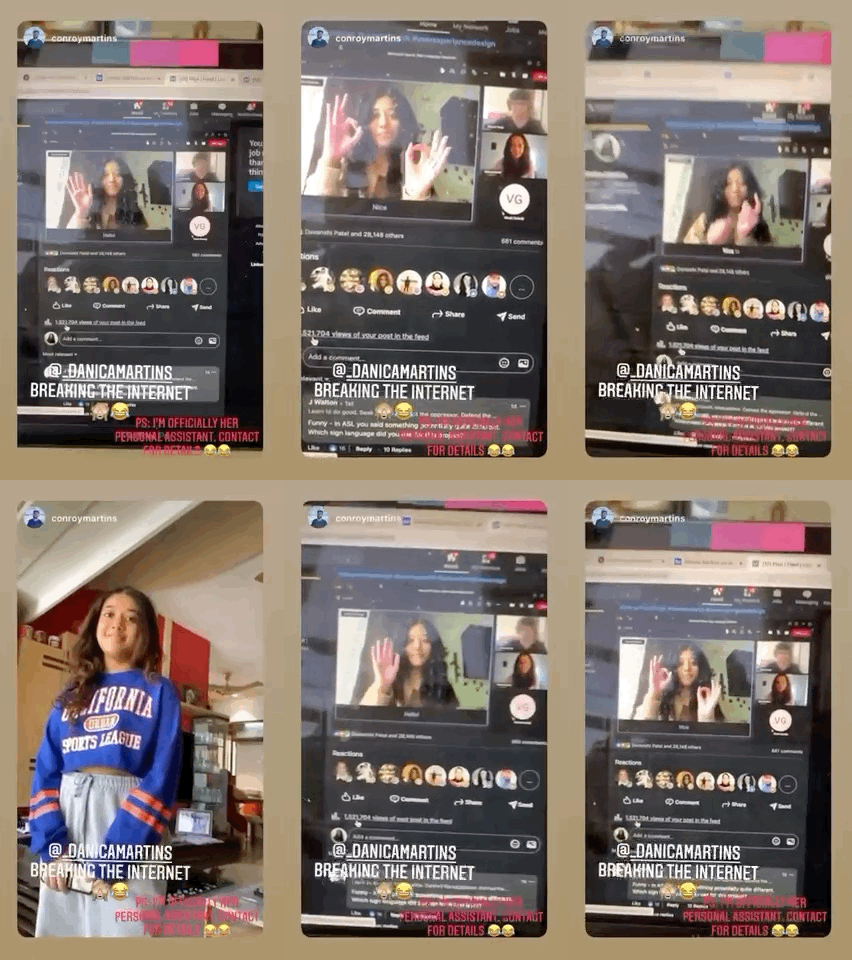
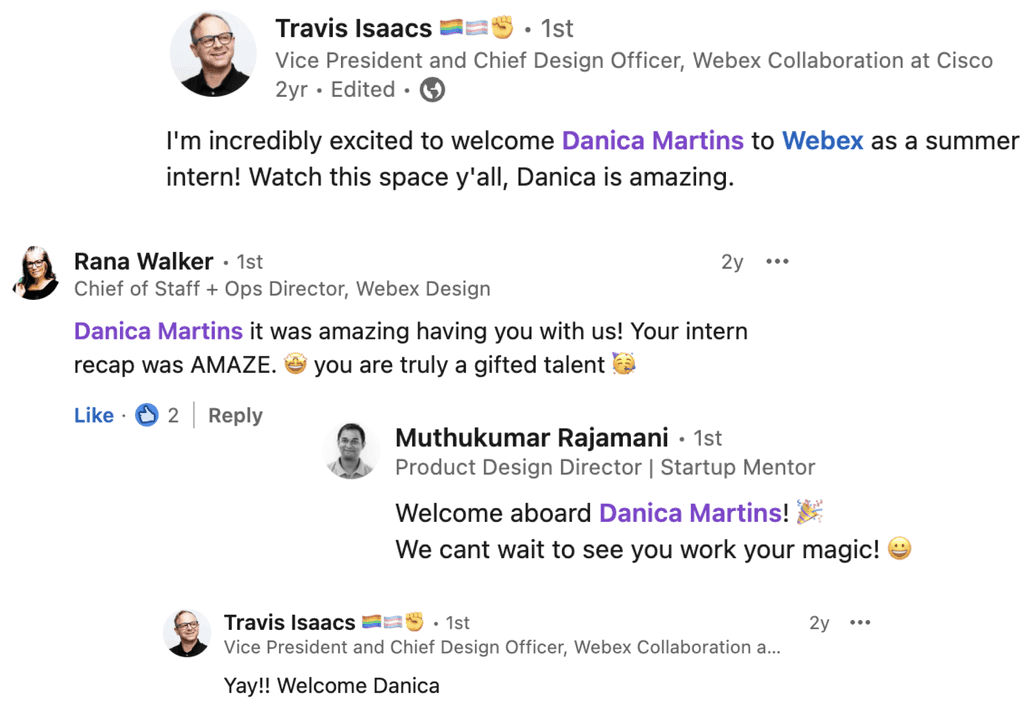
When we shared a GIF of the project on LinkedIn, the response was immediate and overwhelming. Within an hour, the post had thousands of likes, by the next morning, it had 4 million views 🌍. Industry leaders were sharing it, and members of the sign language community connected with us directly. Over 7,000 users reached out to engage, share feedback, or ask questions about accessibility.
Lessons Learned 💡
But with the highs came lessons. Some comments pointed out that our ISL sign for “Nice to meet you” had a very different and unintentional meaning in ASL (essentially, “nice to f*** you”). I quickly realized how cultural differences and language nuances can significantly impact design. It was overwhelming at first, but it highlighted the importance of researching and testing globally, especially when designing for diverse communities .
Other key lessons from Signify include:
🗣️ Words matter: Using respectful terminology, such as “hard of hearing” instead of “mute,” is essential.
📣 Feedback is invaluable: Engaging directly with users uncovered challenges and opportunities we hadn’t anticipated.
🔄 Inclusive design is iterative: Mistakes and misinterpretations are opportunities to refine and improve the product.
📈 Impact scales with clarity: Clear explanations of accessibility features increase adoption and benefit the community more effectively.