
Team & Responsibilties
Me :
Problem synthesis | Co-design | Prototyping | AI model | Screen UX
Dishitaa Mahale :
Data collection | Observations | Prototyping | App UX
Joti Sidhu :
Research analysis | Survey | Prototyping | Hi-fi video
Evelyn Kidd :
Narration | Feedback collection | Usability facilitation
Context
Academic Project
Usability Studies | Autumn 2025

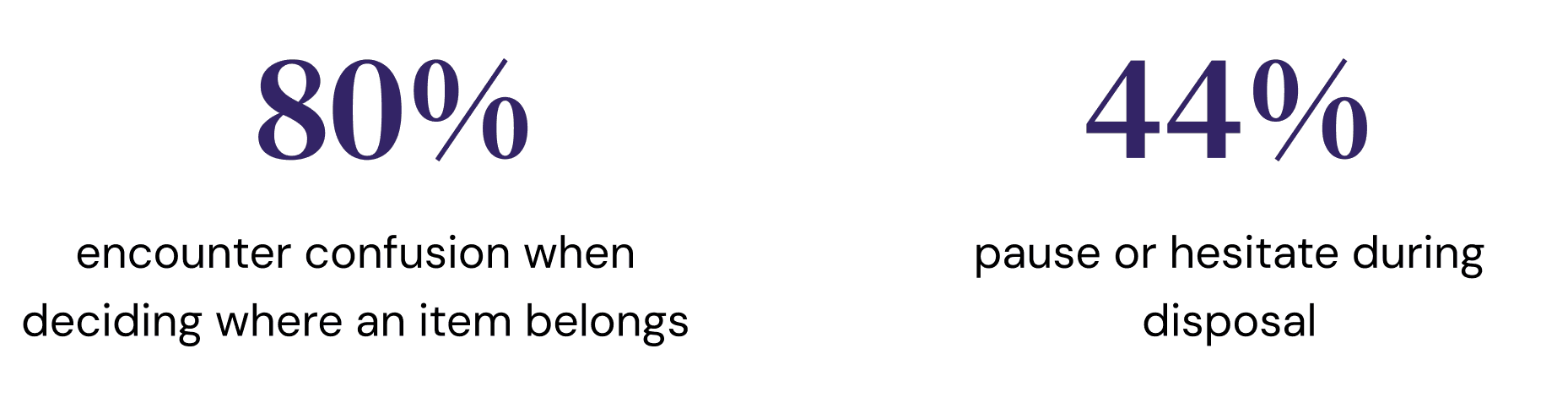
Seattle’s waste system struggles with contamination in public recycling.

According to data from Seattle Public Utilities (SPU) & SPU Media
The Problem?
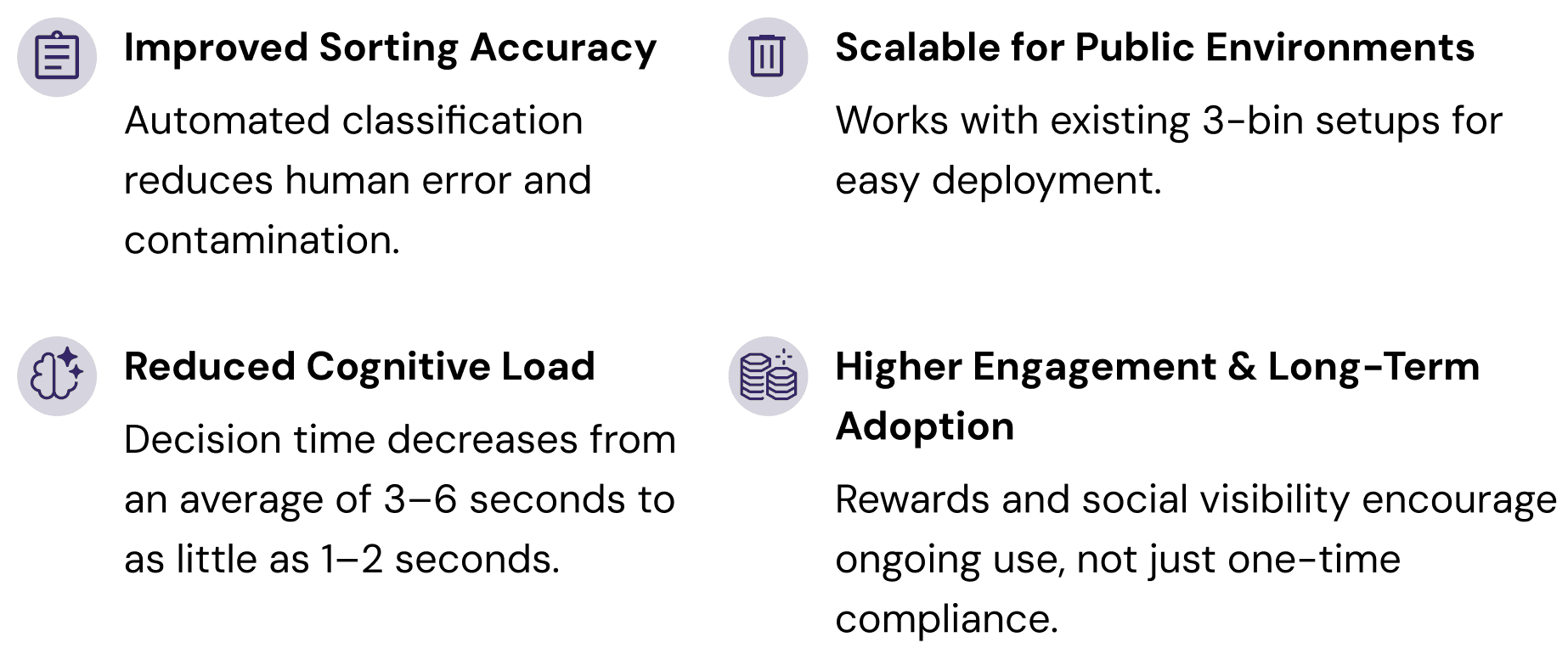
SortAble is an AI-enabled, behavior-supportive waste-sorting system . It integrates automated decision-making, real-time guidance, and incentive-based habit formation to reduce contamination.
The Impact
Make sure to watch the prototype video with sound
for the full experience! 🎥🔊
(The Design Process)
Primary Research
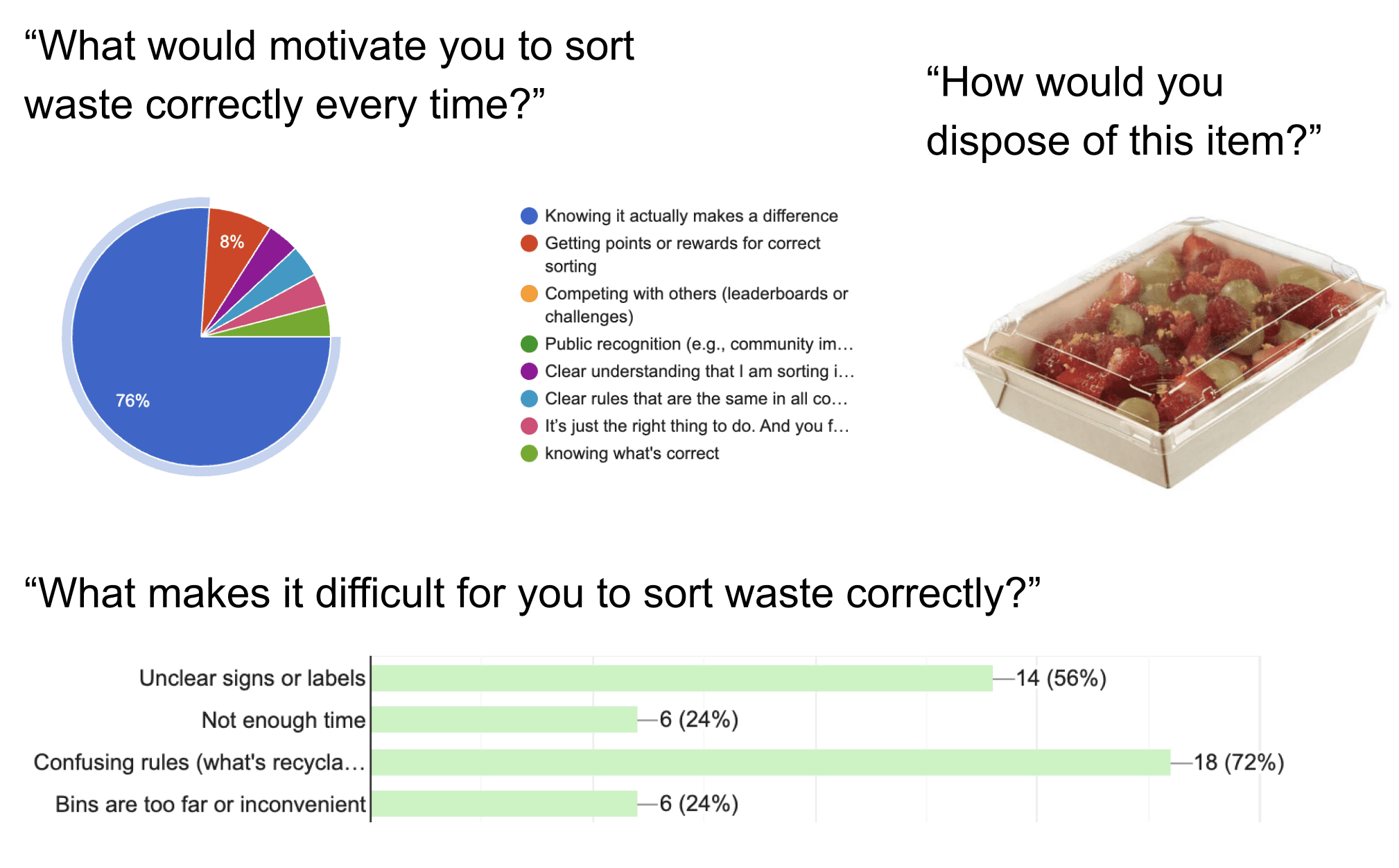
We conducted the survey together as a group
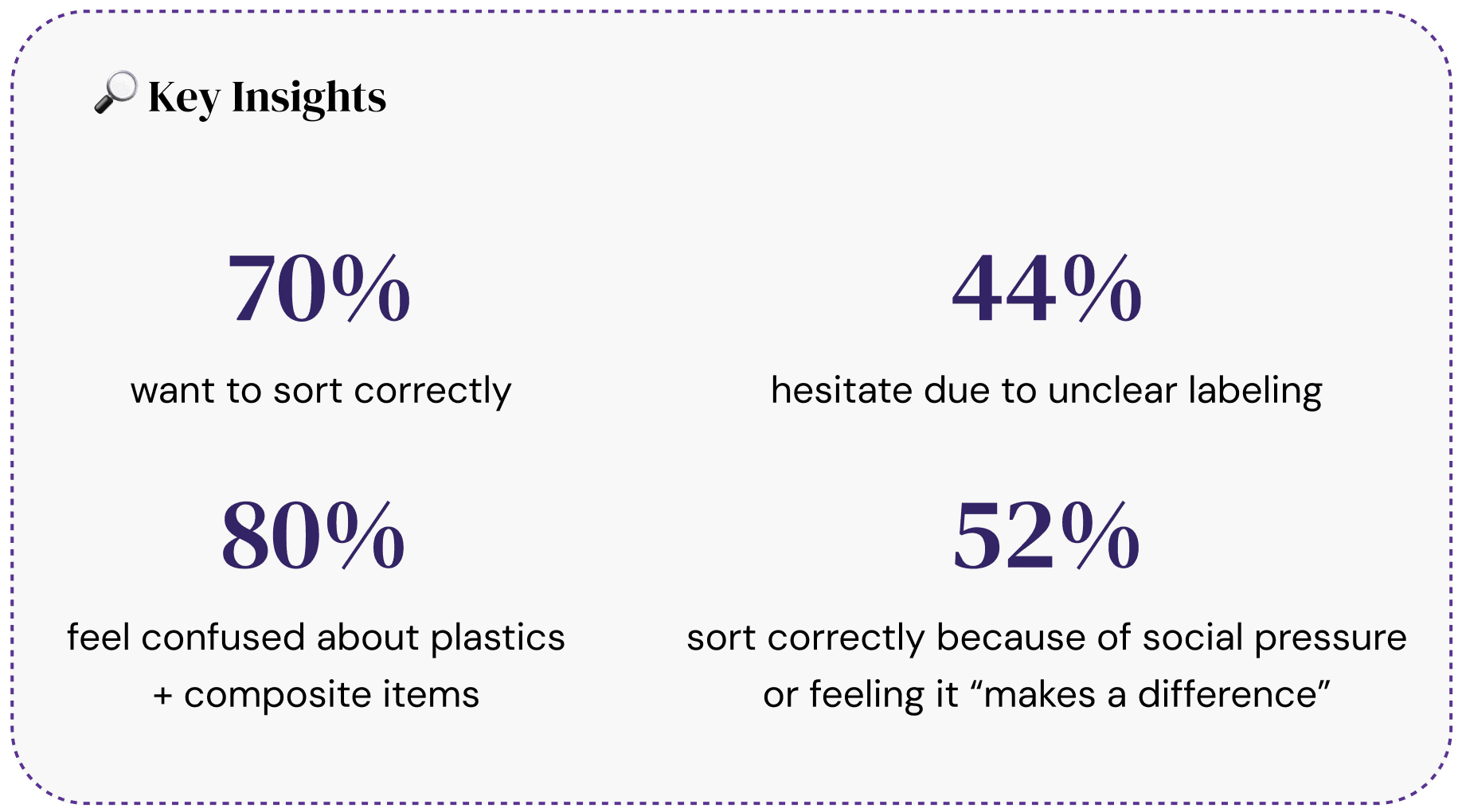
Survey (32 participants)
Observations
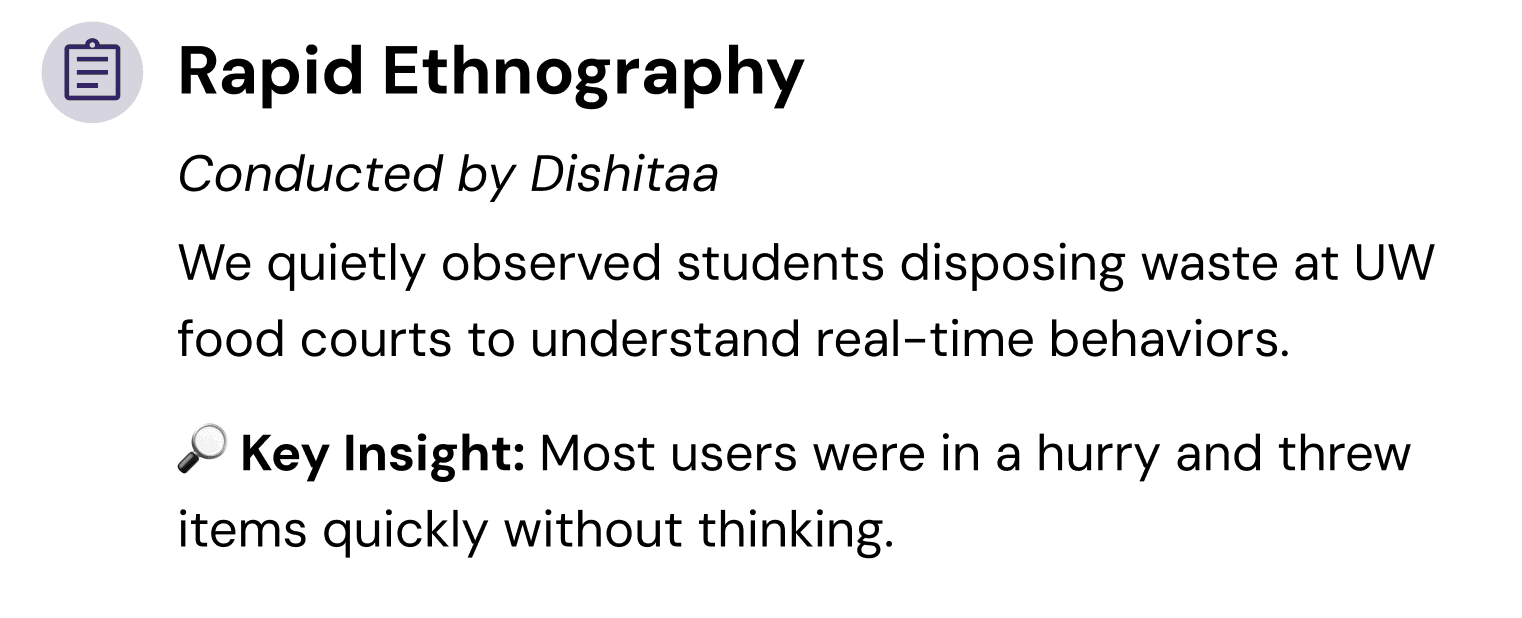
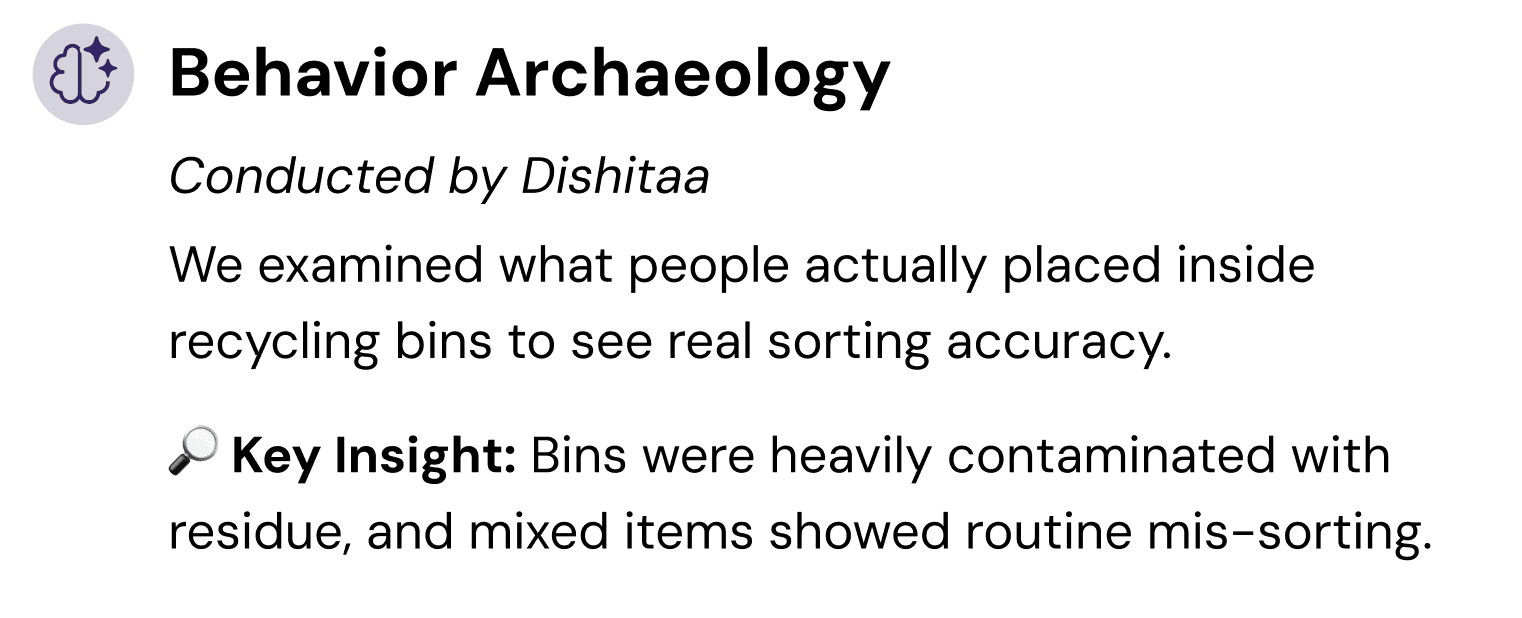
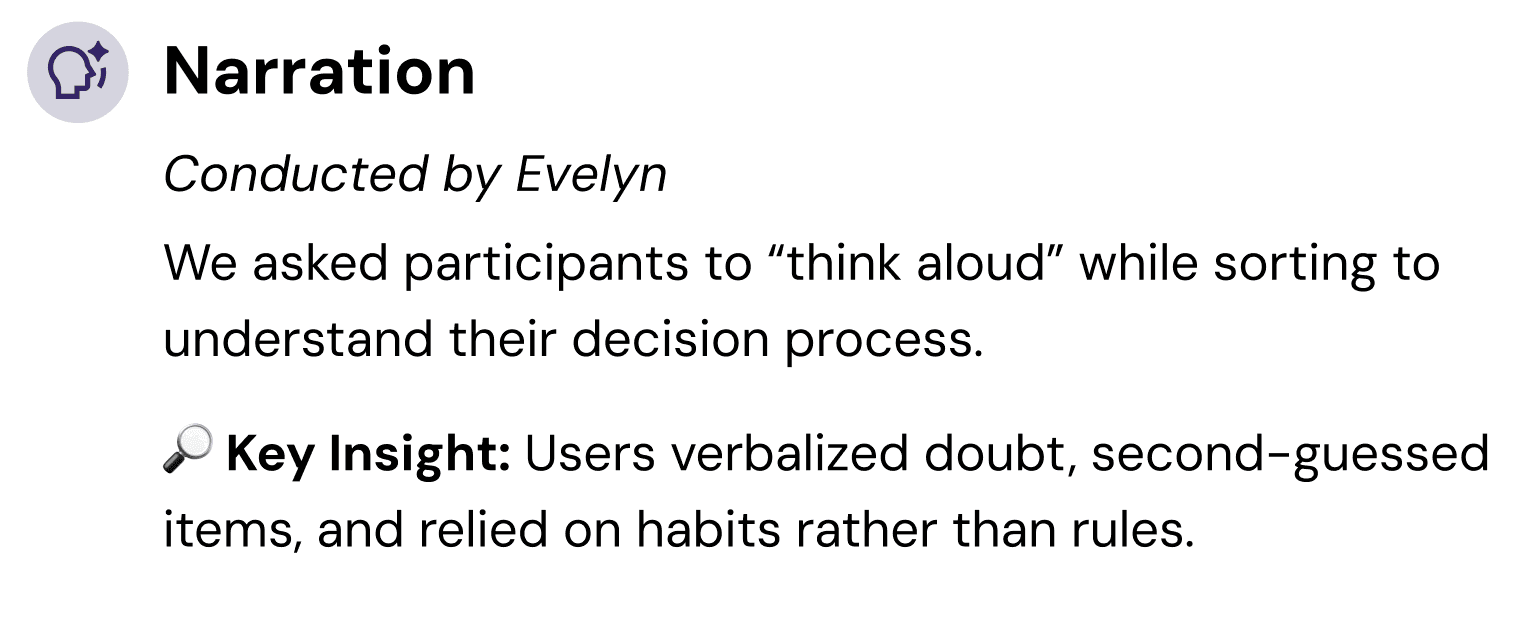
Co-design
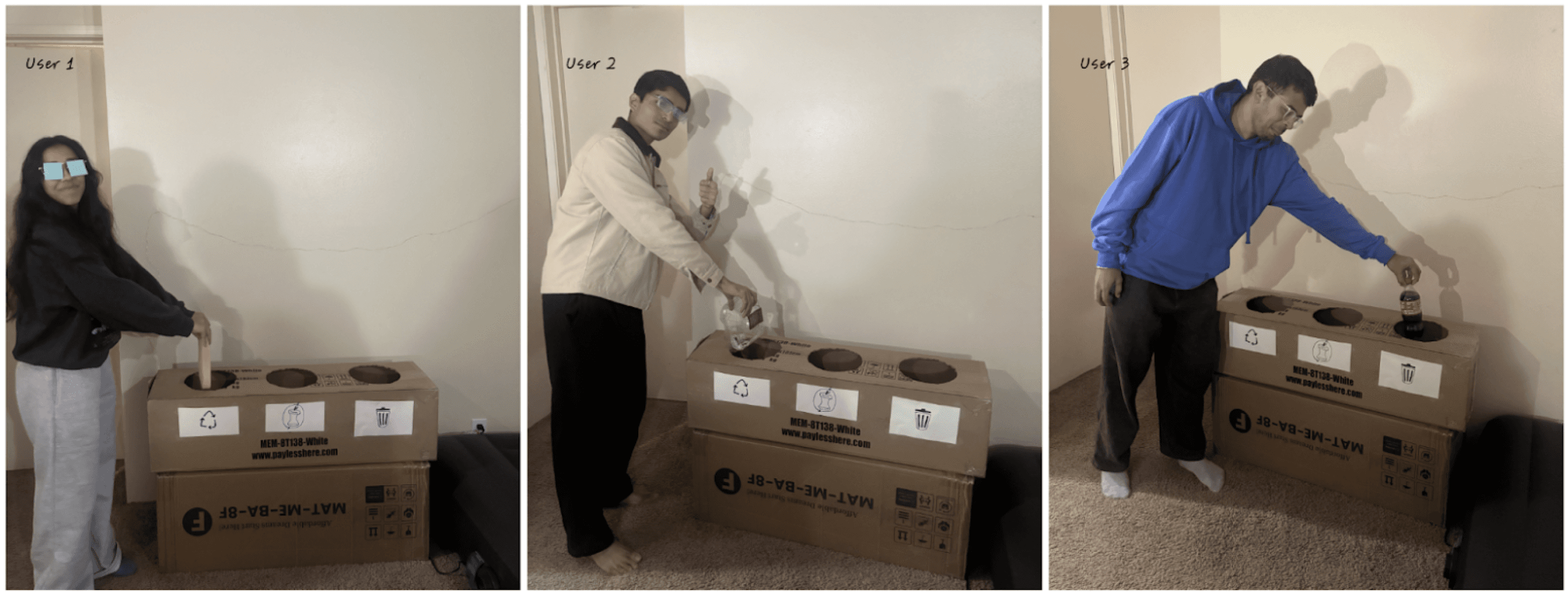
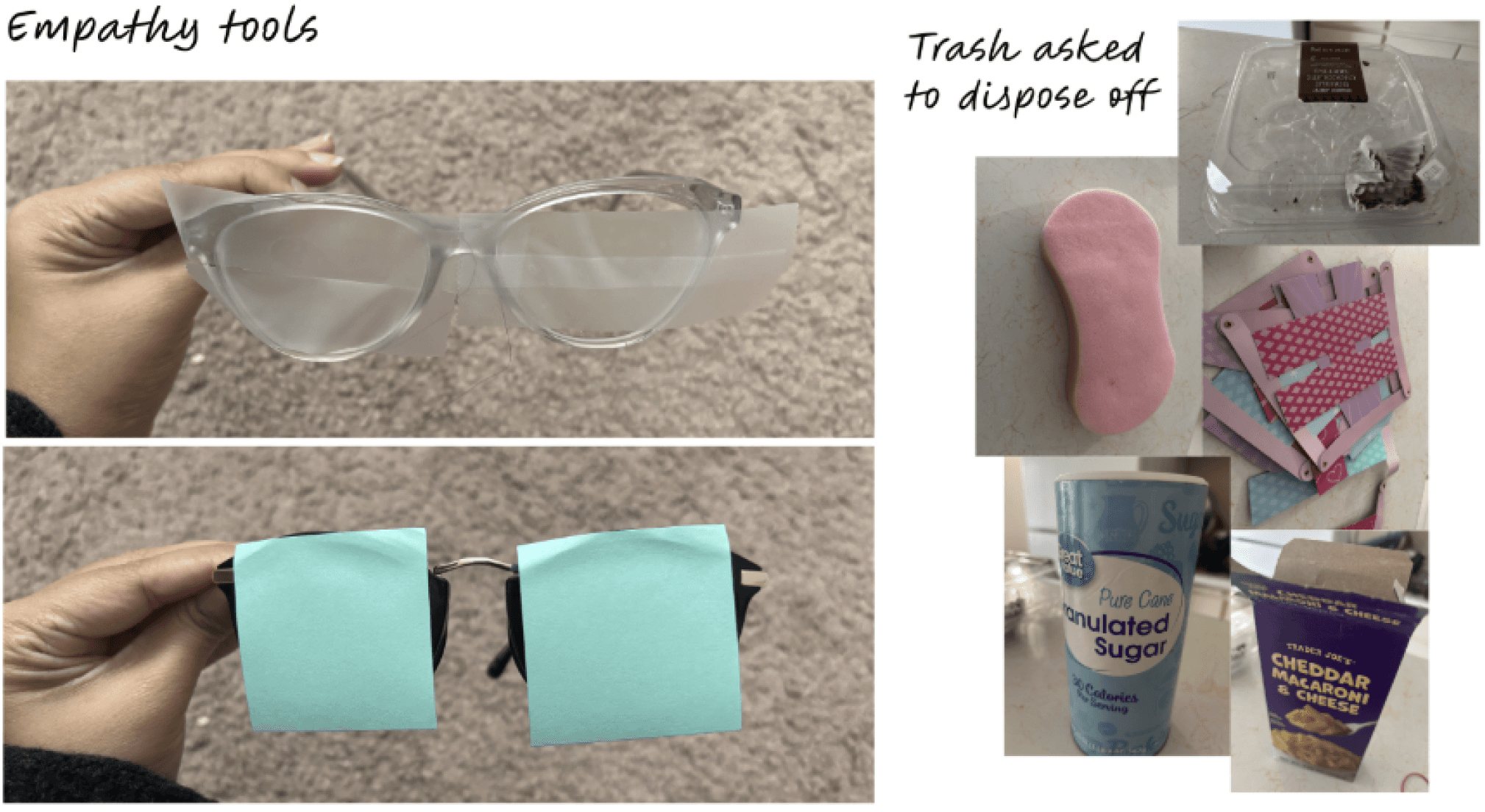
Experience Prototyping + Empathy Tools
Created a mock 3-bin setup with different signage styles and tested it under vision-limited simulations.
🔎 Key Insights: Users rely on past habits and rarely receive correction or feedback
Conducted by Danica
Secondary Research
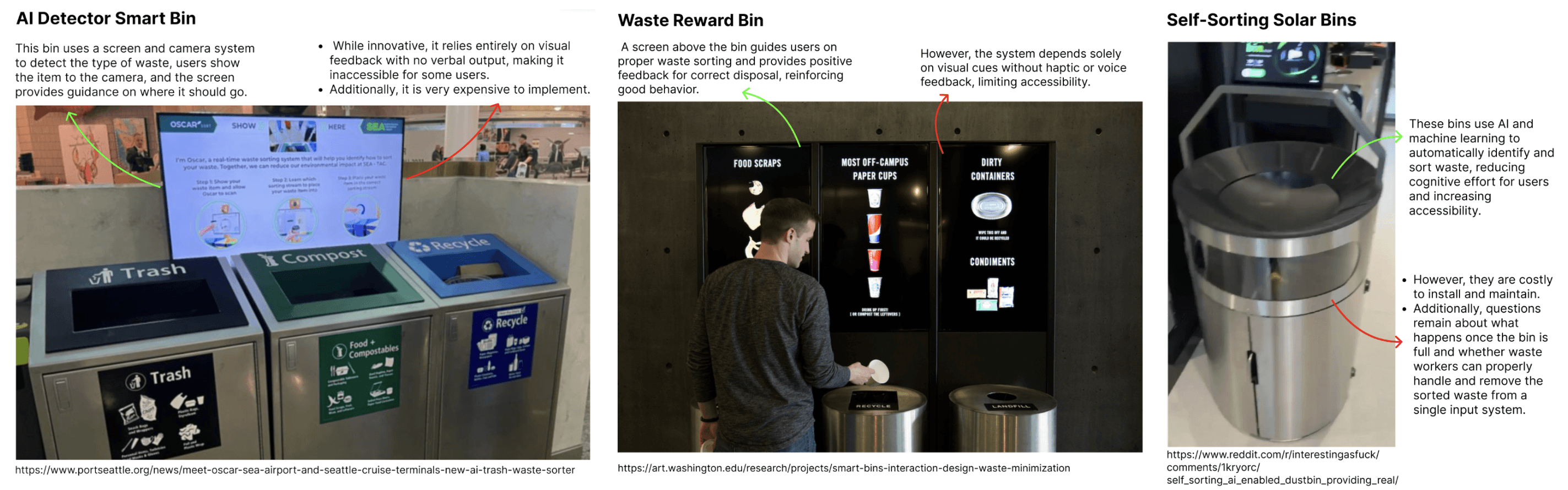
Literature Review & Competitor Analysis
🔎 Key Insights:
Systems rely on cameras + screens, meaning users must read/interpret instructions — increasing cognitive load.
Some bins auto-sort, but don’t reinforce user learning or behavior change.
None addressed social motivation or habit formation, leaving a gap in long-term engagement.
💡 Ideation
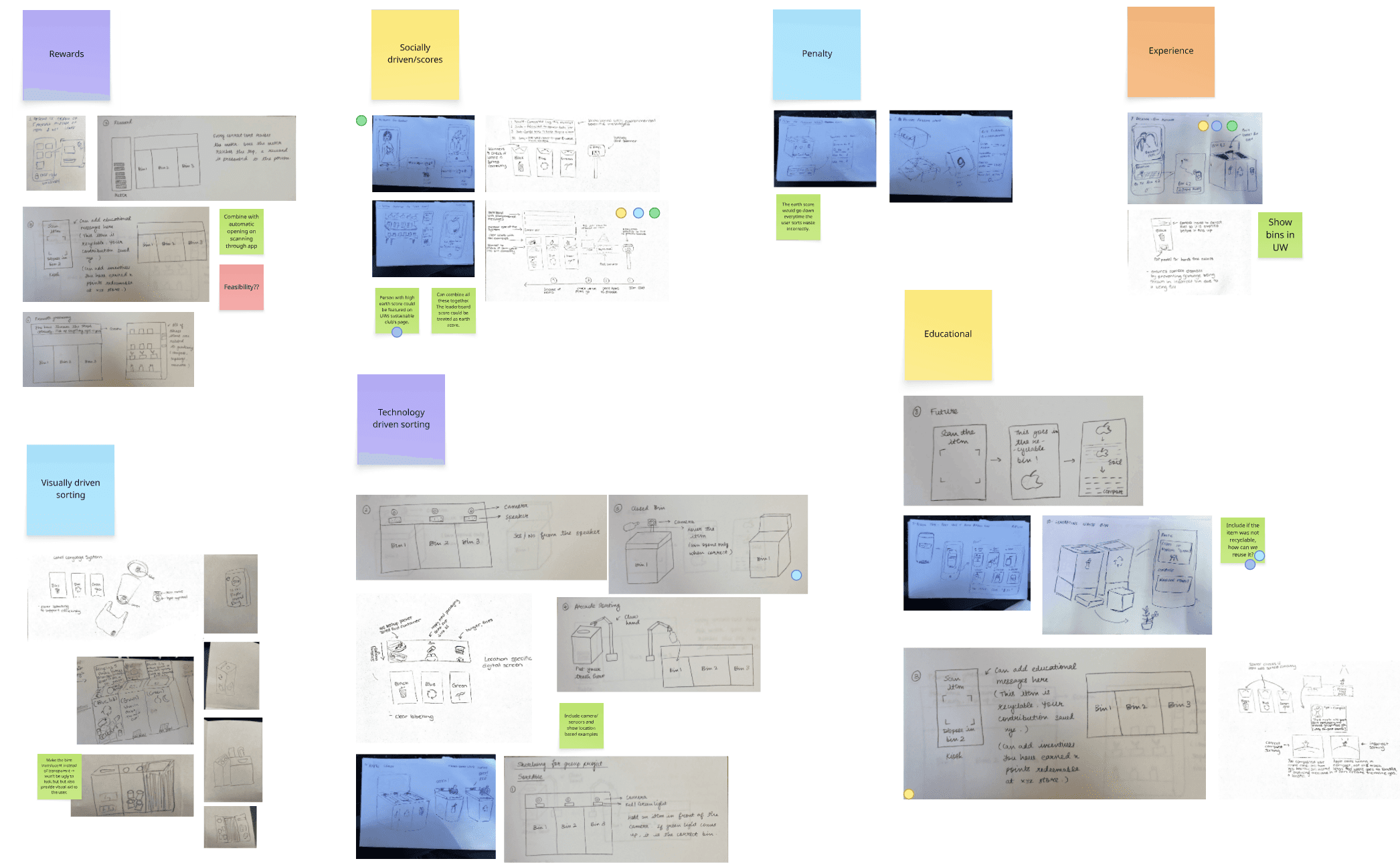
We brainstormed 24 sketches, grouped them through affinity mapping, and refined them into 3 core concepts.
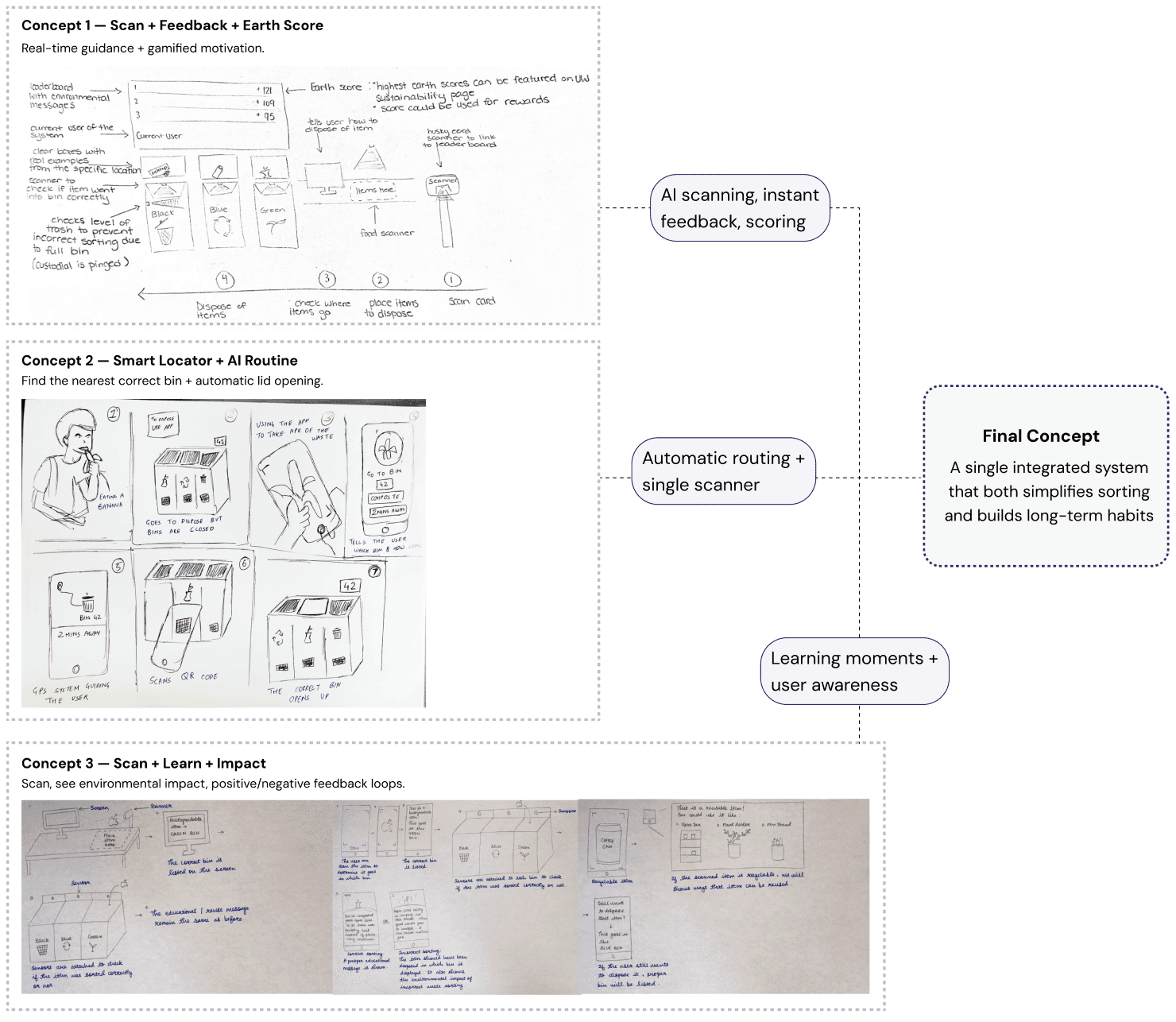
How The 3 Core Ideas Combined Into Final Concept
Prototyping & Usability Testing
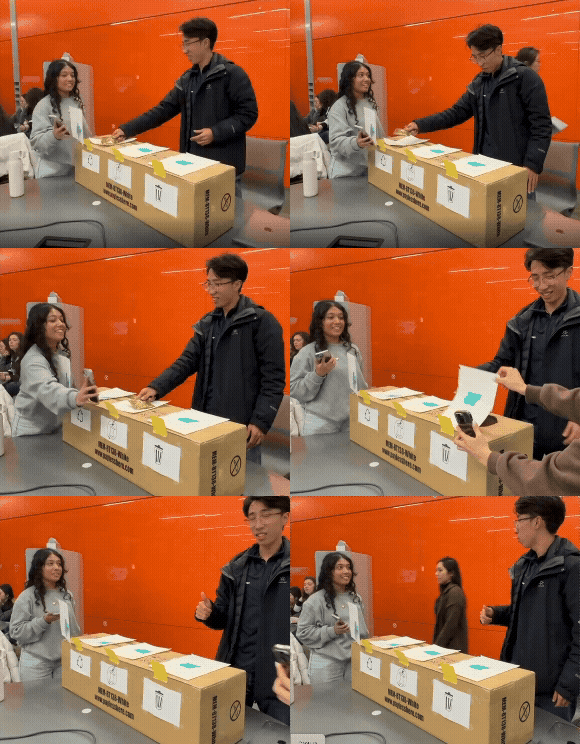
We tested our conecpt using 3 low-fi prototypes:
3D Cardboard Bin (Wizard-of-Oz)
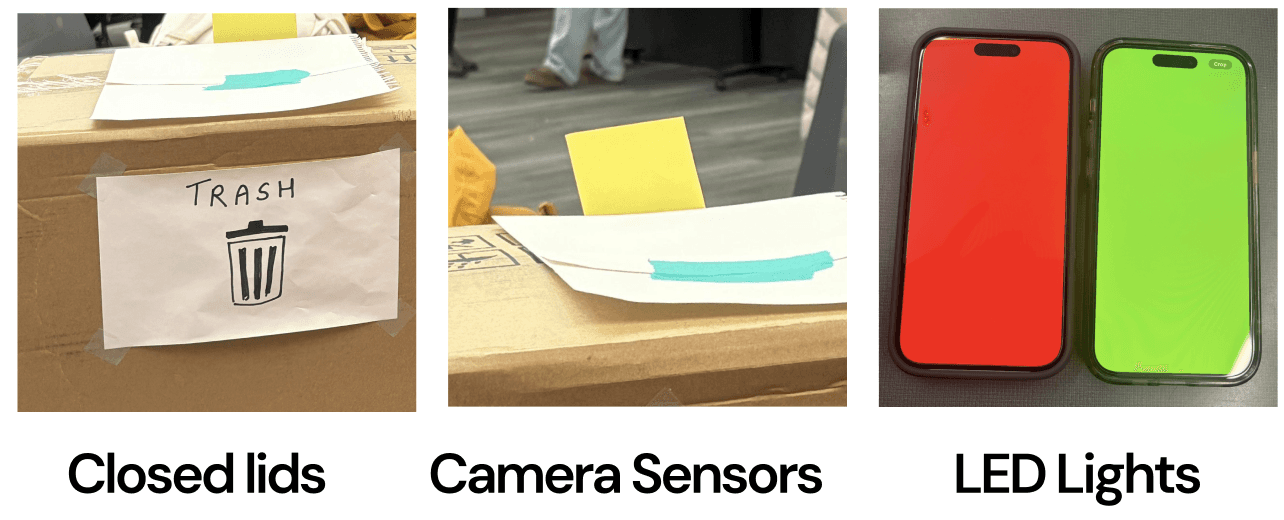
AI Model Prototype
(Object detection)
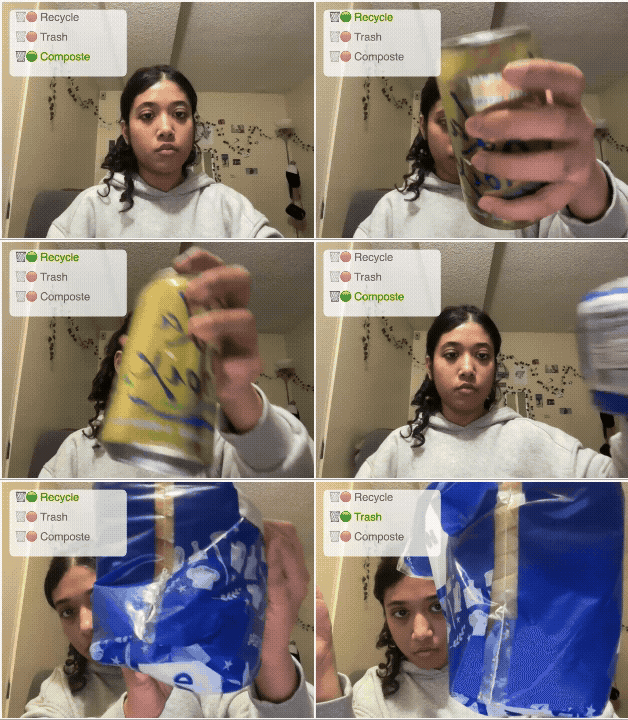
Trained on 300 images per class. Items used : cans, bread & plastic.
[Teachable machines +p5.js]
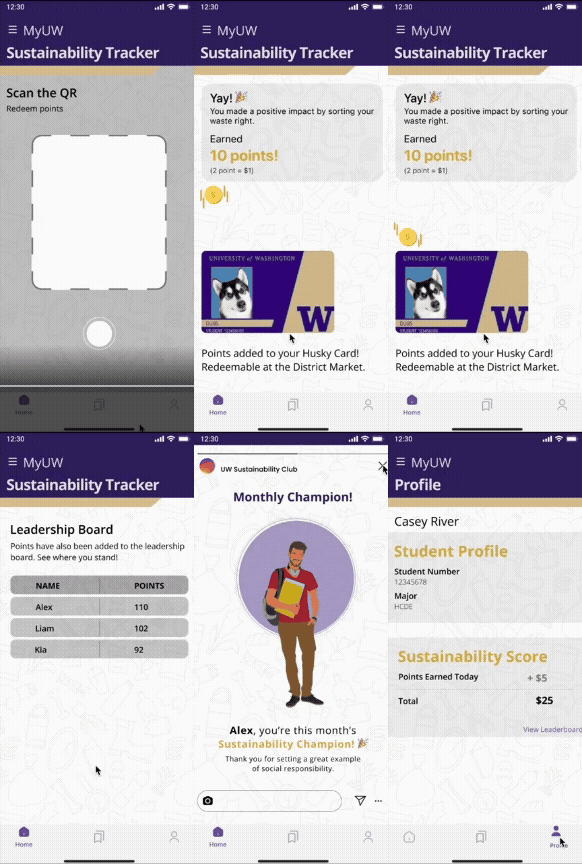
App Prototype (MyUW Integration)
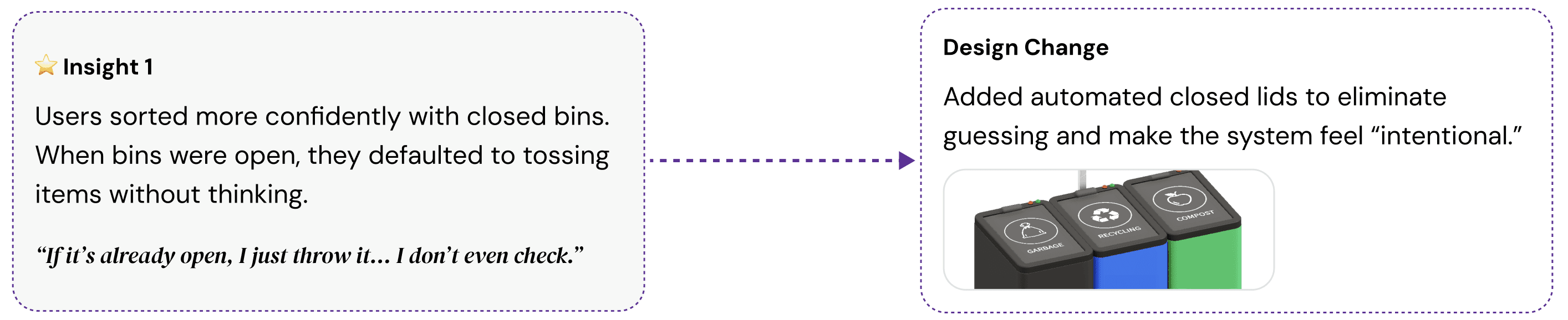
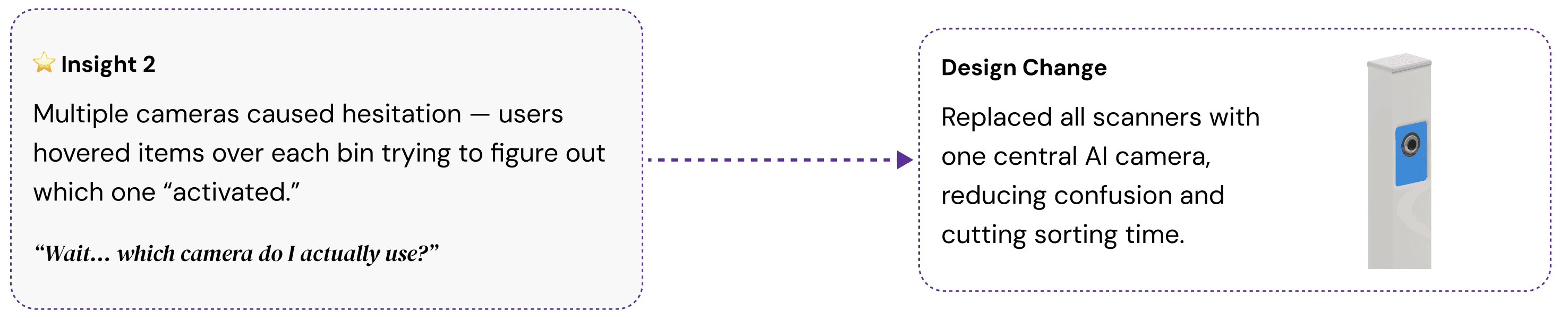
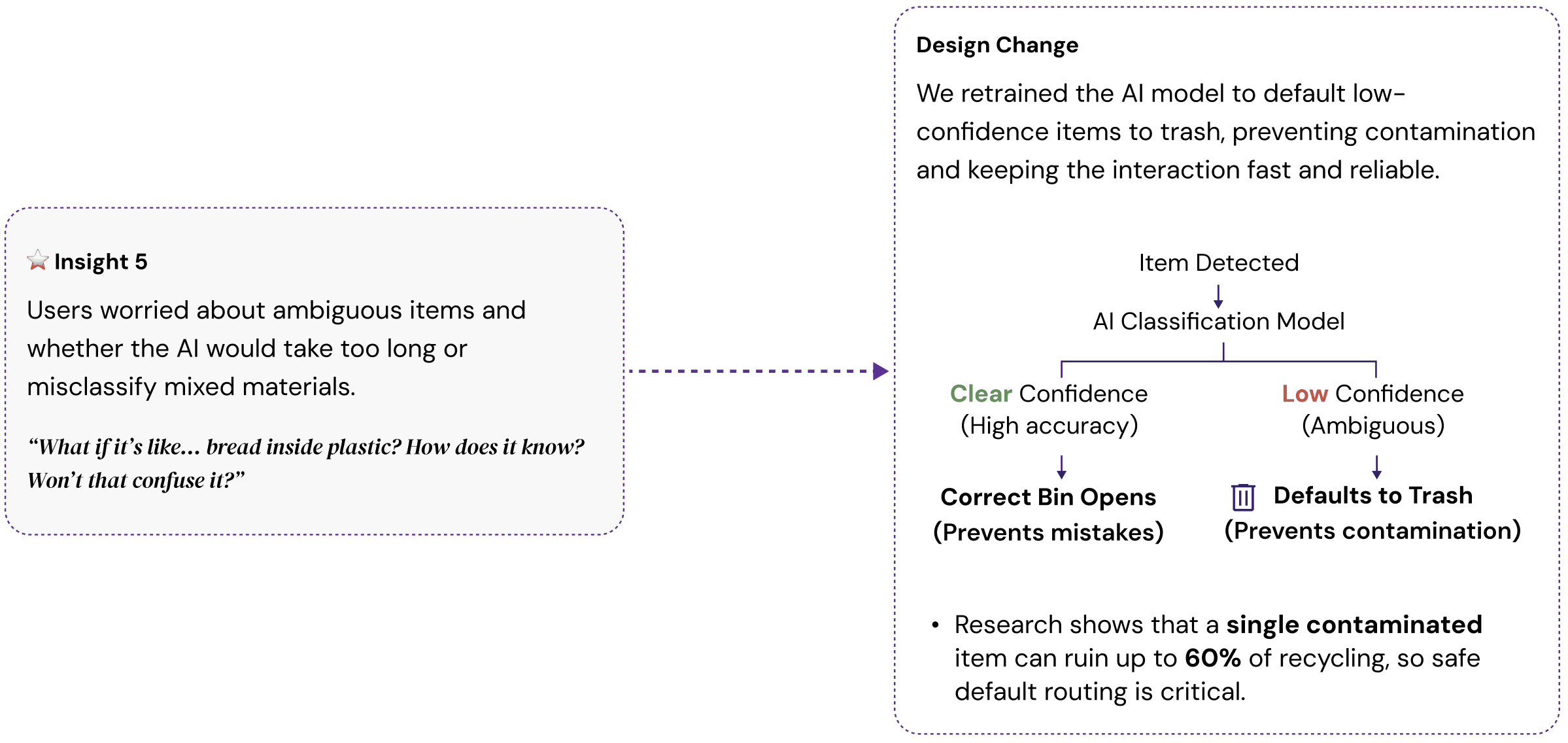
Insights & Design alterations
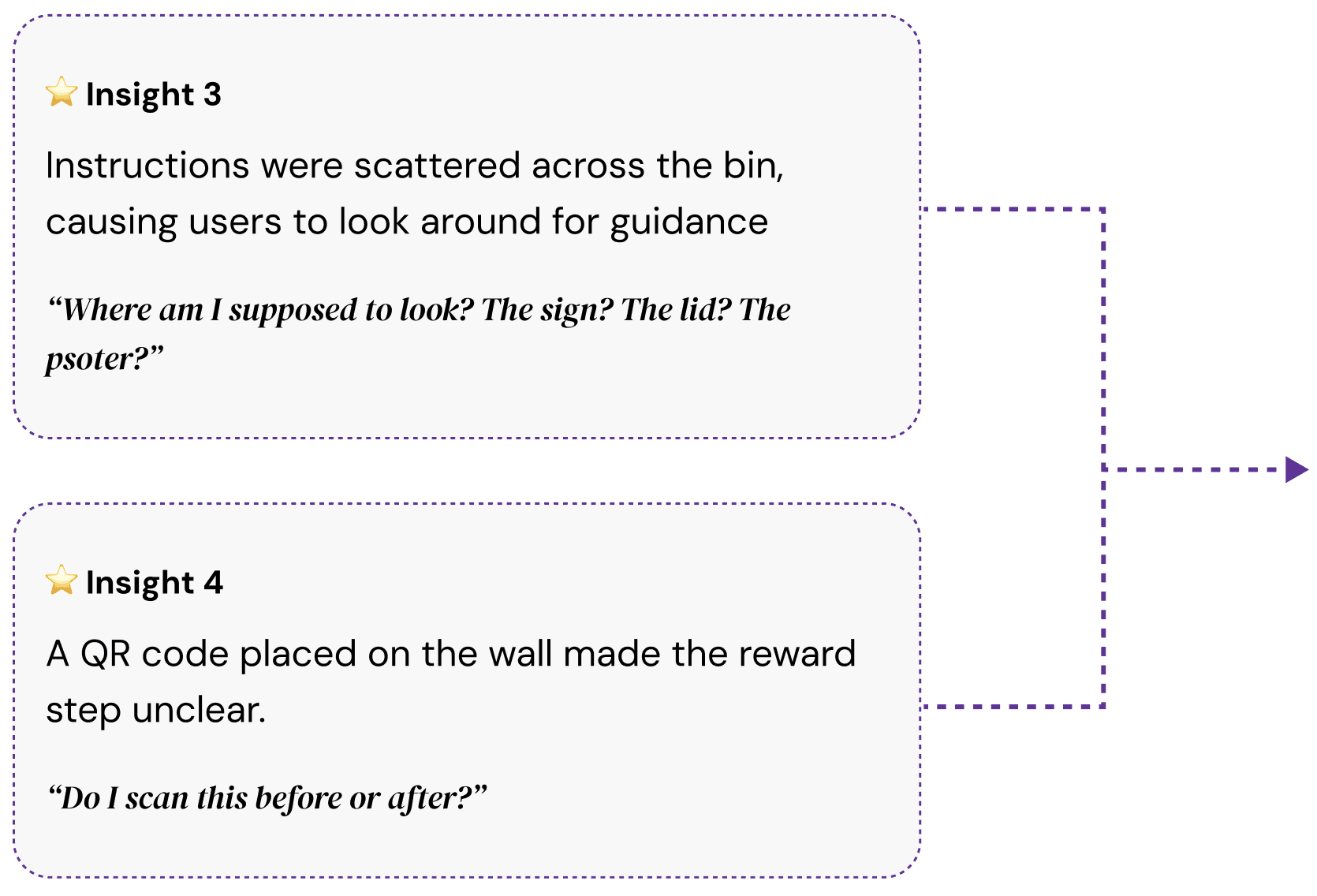
Design Change:
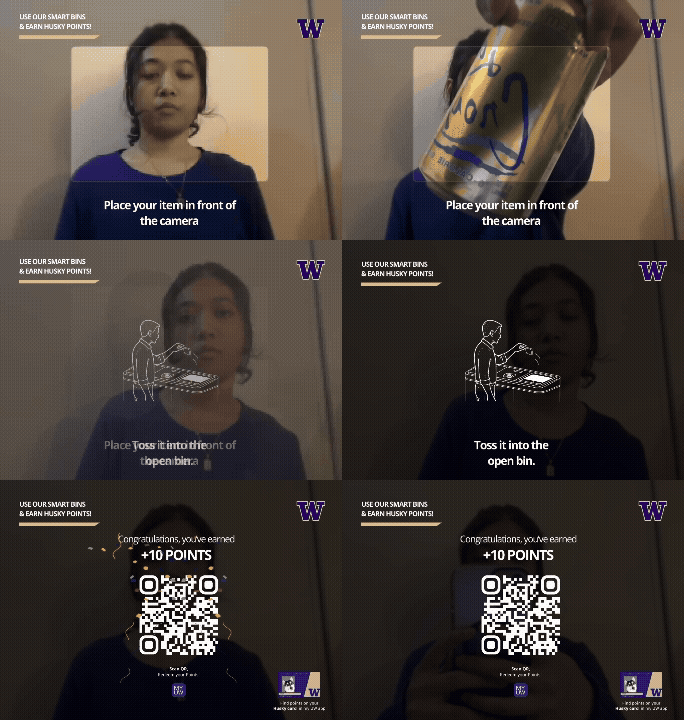
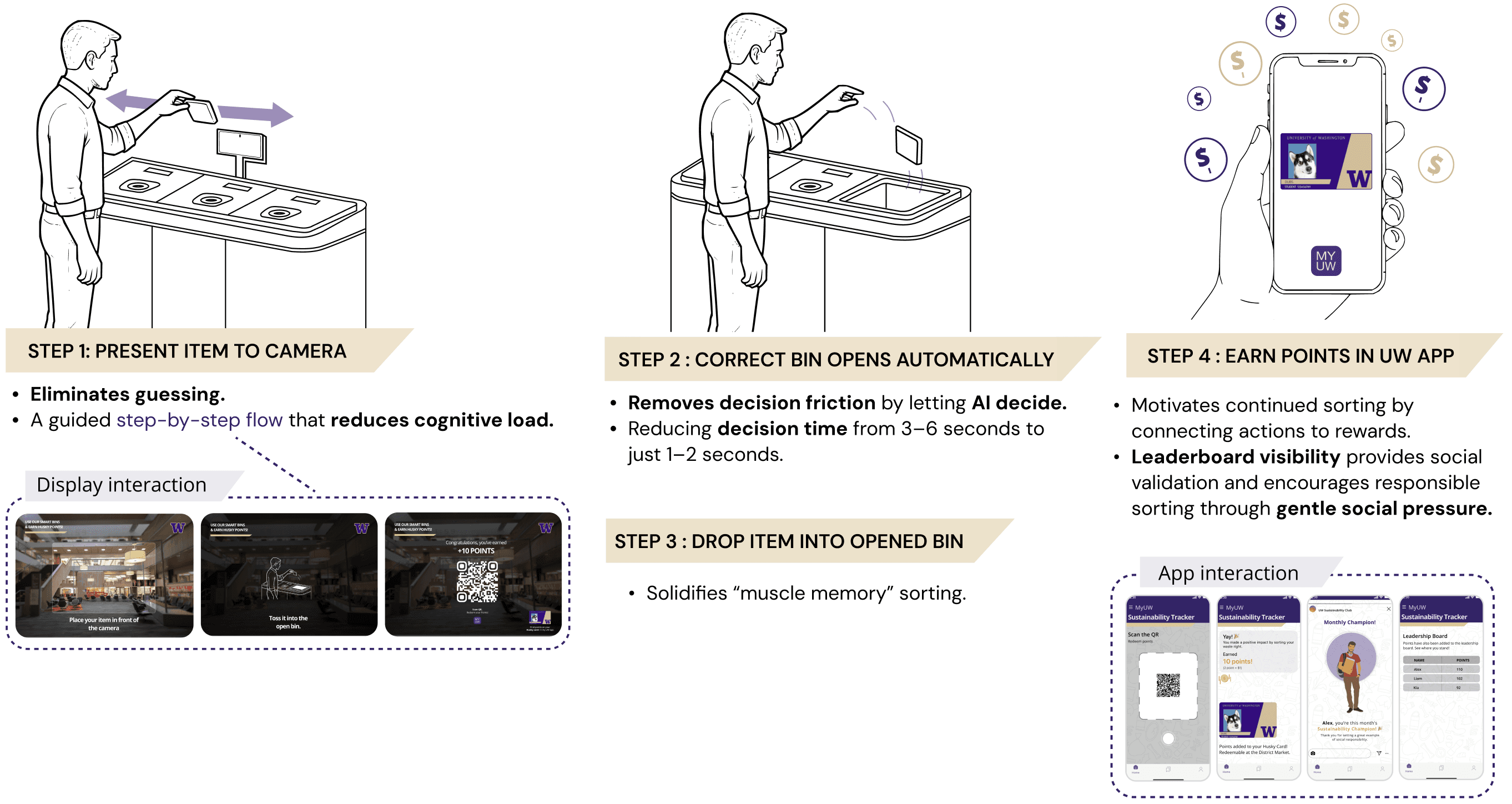
Added one centralized guidance screen with a clean, linear 3-step interaction. Scan item → Correct bin opens → Scan OR code → Earn point
The Final Solution
How does it work?
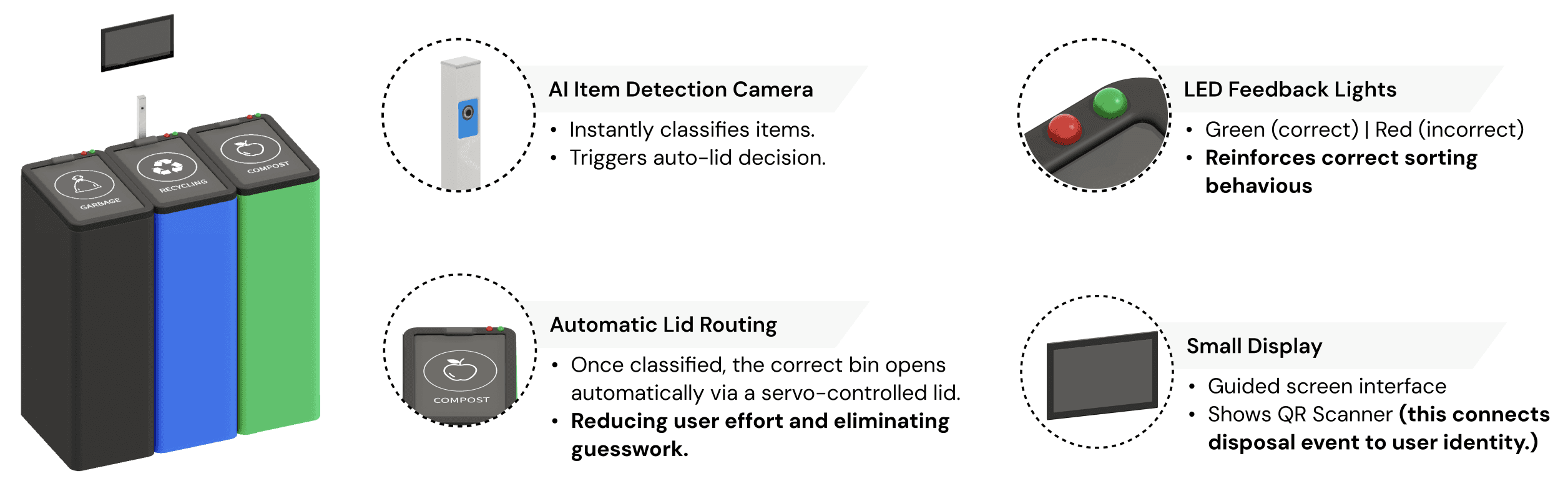
Core components and the system logic behind them
Complementary artifacts
Overhead screen interaction
AI Model Prototype
App Prototype